
Yadkin County Arrest Report Range
No Yadkin County office publishes a 72-hour, seven-day, weekly, or month-to-date arrest log. The Sheriff's Office and Detention Center pages serve as contact and facility sources, and the Yadkinville, Jonesville, and Boonville police pages offer no recurring blotter either. So no cadence exists. There is no archive depth and no photo rule. Entries never roll off on a published schedule. That absence changes the task, pushing a multi-day search toward the agency itself and a defined date range. The arresting agency writes the report. The detention center logs the booking admission. North Carolina Courts carries the later case. A newspaper may choose a single event to cover, and no one source adds up to a county-wide blotter.
Trace Yadkin County Arrest Reports
Fix the date span first. Name the agency with jurisdiction too. That discipline keeps a selective news result or a stale third-party entry from posing as the full record. It also separates the arrest date from the later booking, publication, court, release, or transfer dates.
- Write down the full name, likely agency, location, and earliest and latest possible event dates.
- Ask the Yadkin County Detention Center whether the event produced county custody and whether that custody ended.
- Request the arrest or incident report from the Sheriff’s Office or the correct municipal police department.
- Use the North Carolina court portal to locate the filed case, court dates, and disposition.
- For an older span, identify the record type before applying the relevant retention or archive route.
The detention center answers at 336-849-7840. The Sheriff's FAQ sends crime-report copy requests to the Criminal Investigations Division secretary. When the possible arrest happened today, start with the Arrested Today verification sequence instead of history.
Yadkin Arrest Report Fields
No county log row is posted for inspection. Nothing below is guaranteed on a web page. Request each field, confirm it, and ask the custodian to separate event data from jail and court data.
| Field | How to read it |
|---|---|
| Full name | Identity used in the record; check spelling and other lawful identifiers. |
| Arrest date and time | The enforcement event, which can precede booking or publication. |
| Arresting agency | The office responsible for the arrest or incident report. |
| Alleged violation | The charge at that point, not a conviction or final charge. |
| Booking date or number | Detention intake data, available only if a jail booking occurred. |
| Bond or release | A case-specific custody condition that may change after intake. |
| Case number and court date | The bridge to the court docket and later proceedings. |
| Disposition | The final recorded outcome, such as dismissal, acquittal, plea, or conviction. |
A booking photo is a law-enforcement identification image. Yadkin County has no official multi-day photo gallery and no publication policy. A news outlet's copy may not even be current. If a photo matters to a request, list it separately and confirm it is maintained and releasable.
Yadkin Weekend Arrest Report Timing
The Detention Center and county Emergency Communications run past ordinary office hours. Round-the-clock staffing does not mean round-the-clock web posting. Yadkin County has no rule that weekend arrests surface on Monday, no holiday catch-up schedule, and no stated lag for a public blotter. News timing reveals nothing about arrest volume either. Office schedules still shape requests. County administrative and Sheriff pages post weekday hours. The jail can field present-custody questions on its published line any time. A report created on a Saturday may need routing to the record custodian later. Magistrate releases are the real trap. When someone is released without a booking, a detention search may never return the expected result.
Yadkin Arrest Reports in News
The Yadkin Ripple is the county's local weekly. Its searchable NewsBank archive runs from 2007 to the present. Access may require an account. It is not a county-managed arrest log, though. A weekly paper picks newsworthy events, so routine or minor bookings may never appear, and stories often run after the arrest date. For dated coverage, the Yadkin Ripple archive offers a text-search interface.
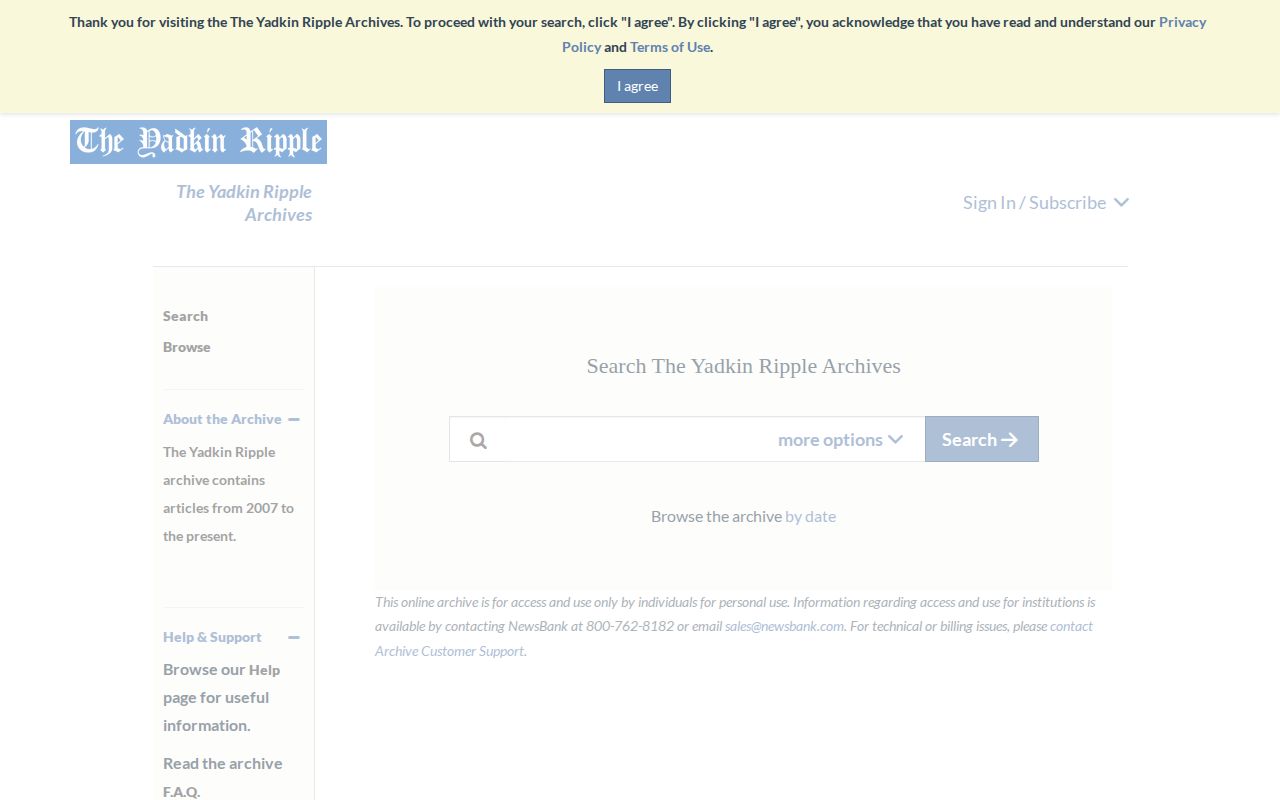
The archive supplies context and publication history. It cannot show every person booked at the county detention center. Regional outlet WXII works the same way. Its stories often build on Sheriff or police announcements and may explain a major investigation or a later charge. Selection is not a roster, though. When details conflict, the agency record and the court record control.
Separate Yadkin Police and Court Records
North Carolina Courts splits its records cleanly. Police reports come from the police agency. Court records come from the court system. In Yadkin County, the Sheriff or a municipal department holds the arrest narrative. The Clerk of Superior Court or state portal holds the case number, court date, and outcome. The courthouse and Clerk answer at 336-679-3600. The North Carolina Courts record-request page confirms that court staff do not hold police reports. Respecting that boundary keeps a request from dead-ending and sends it to the office that created the record.
Yadkin Arrest Archives and Retention
The North Carolina records schedule for sheriffs sets rules. It says how long arrest-related files stay on the shelf. An identification photo kept outside a case file may be destroyed after three years. A photo inside a case file follows that file's own rule. Incarceration records cover entry and release summaries, detainee arrest sheets, commitment and release orders, and pretrial-release agreements. Those files can be destroyed three years after release or transfer. Weekly inmate lists may go once superseded or obsolete.
Those rules say what the schedule permits, not what Yadkin County actually shredded. So an older arrest request should name the record type, the date, and the agency. Include the person too. That lets the custodian check the correct retention category. County-wide public-records requests go through Tanya Gentry, Clerk to the Board. Reach her at 336-849-7513, Tgentry@yadkincountync.gov, or P.O. Box 220, Yadkinville, NC 27055. No special booking-photo fee is published. No guaranteed response time is published either. For historical holdings, the State Archives catalog is a separate route worth a look.
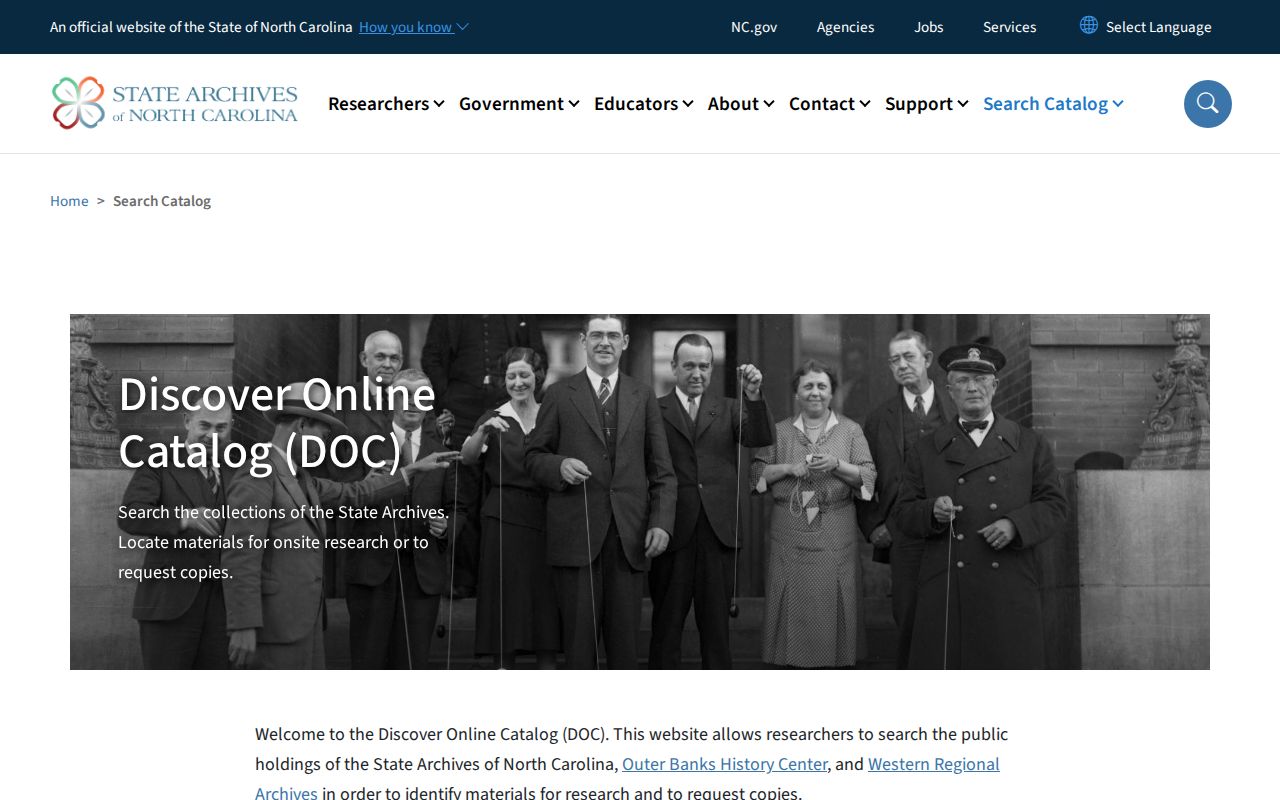
Yadkin's historical finding aid leans toward nineteenth and early twentieth-century jail material. It is not a modern booking log or mugshot gallery.
Unofficial Yadkin Arrest Archives
Search results for Yadkin County arrests often surface third-party pages. The official record should always come first. Busted Newspaper carries a Yadkin County page with old entries and deep pagination. Mugshots.com shows an apparent county archive. Its visible date links run from 2011 through 2022. Neither one counts as a current Yadkin feed. Timestamps, name spellings, completeness, photo sources, and correction status can all lag behind the official record.
Other gaps matter too. RecentlyBooked, Arrests.org, and Mugshots.zone list no verified Yadkin-local page. Adjacent-county listings and state-level "yesterday" pages cannot stand in for Yadkin County. Jail Exchange is a commercial facility guide, not the Sheriff's roster. The Busted Newspaper Yadkin page appears here only to document the unofficial landscape. Its visible caveats come with it.
Treat this commercial page as a lead, never as a current arrest record. Verify any entry with the agency that made it.
Yadkin Arrest Reports Need Outcomes
An arrest report is a snapshot. It shows what an officer did at one point in time. Charges can be reduced, amended, dismissed, or resolved afterward. "Disposition" is the court's recorded outcome. It may be a dismissal, acquittal, plea, conviction, or another result. A news archive or third-party page can linger online long after the case changes.
So when an older Yadkin arrest turns up, follow it to the North Carolina Courts portal or the Clerk. Compare names carefully. Use the date and case number when possible. Tracing a report to its outcome takes days. But it is the only way to know where the case actually landed.